

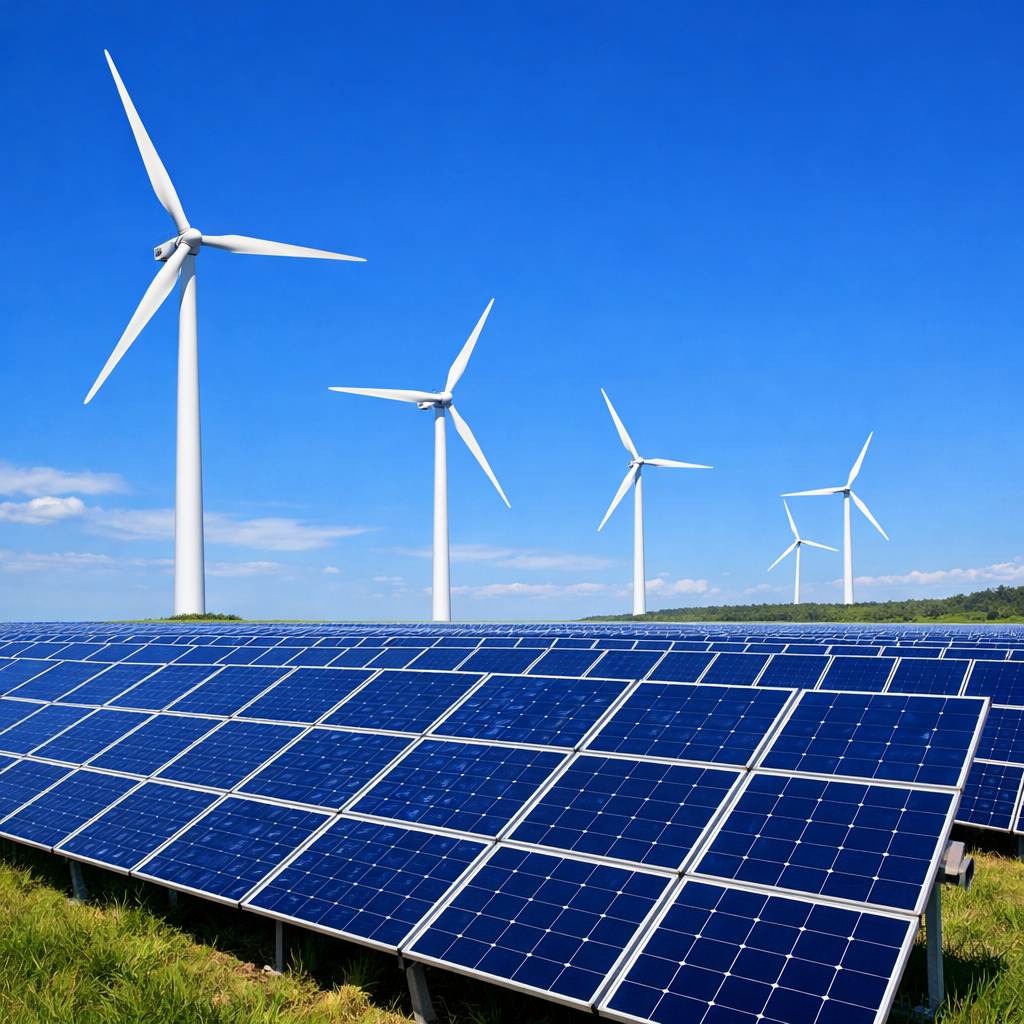
By Emily Rodriguez — Around the world, a quiet revolution is reshaping how we power our lives. Solar, wind, and nuclear energy are no longer fringe players — they’re becoming the backbone of global electricity as nations pivot away from coal and oil.
Renewables surge past traditional power sources
In 2025, solar photovoltaic (PV) capacity saw its most dramatic expansion yet, contributing more than one-quarter of the rise in global primary energy demand. This marked the first time a modern renewable energy source led demand growth. Natural gas followed with nearly 17% of the growth, while oil, solid bioenergy, and waste rounded out the rest. Despite this, coal demand growth slowed significantly, especially in major economies like China and India.
This shift helped renewables and nuclear together outpace coal-fired power for the first time in recent history. Their combined energy generation nearly matched, and in some instances exceeded, that from fossil fuels.
Challenges beneath the momentum
Geopolitical and infrastructure pressures
Though investment in clean energy surged, with $3.3 trillion poured into global energy in 2025, the World Economic Forum’s Energy Transition Index shows strain. Rising geopolitical tensions, disruptions in key supply routes — notably in oil and gas — and aging infrastructure are exposing vulnerabilities. Many countries that depend heavily on imported fuel are especially at risk.
Uneven growth across regions
China continues to lead the charge, adding nearly 500 gigawatts (GW) of renewable capacity in one year alone — over 60% of global growth. India also saw a nearly 60% boost, mostly from solar installations. Meanwhile, regions like Sub-Saharan Africa and the Middle East are seeing solid but more modest growth, constrained by finance, grid stability, and access to skilled labor.
What this means long term
If current trends hold, low-emissions sources (renewable energy plus nuclear) could supply half of global electricity by 2030. That shift would lower dependence on coal and reshape global energy markets. But it won’t be easy. To sustain the transition, nations will need better grid infrastructure, more resilient supply chains, coherent policy, and cooperation across borders.
Here in Lubbock, where sunny skies are a given, these global trends offer both inspiration and reminder. Local planning, investment, and policy can play a part in the bigger picture—not just for sustainability, but for energy security and economic opportunity as well.